
Enhancing Safety in a Live Tram Corridor through Workzone Digitisation
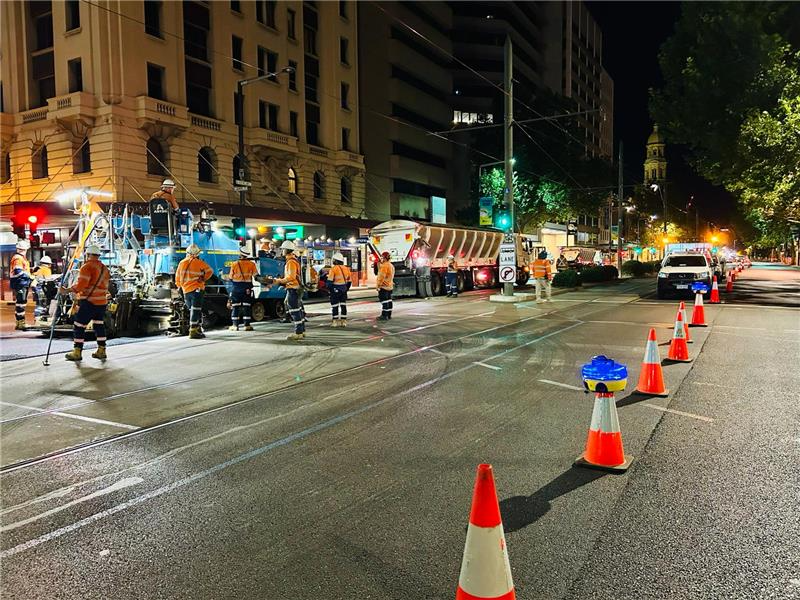
Location: King William Street
City: Adelaide
Client: Fulton Hogan
Dates: 27 January – 9 February
A Live CBD Corridor Under Constant Pressure
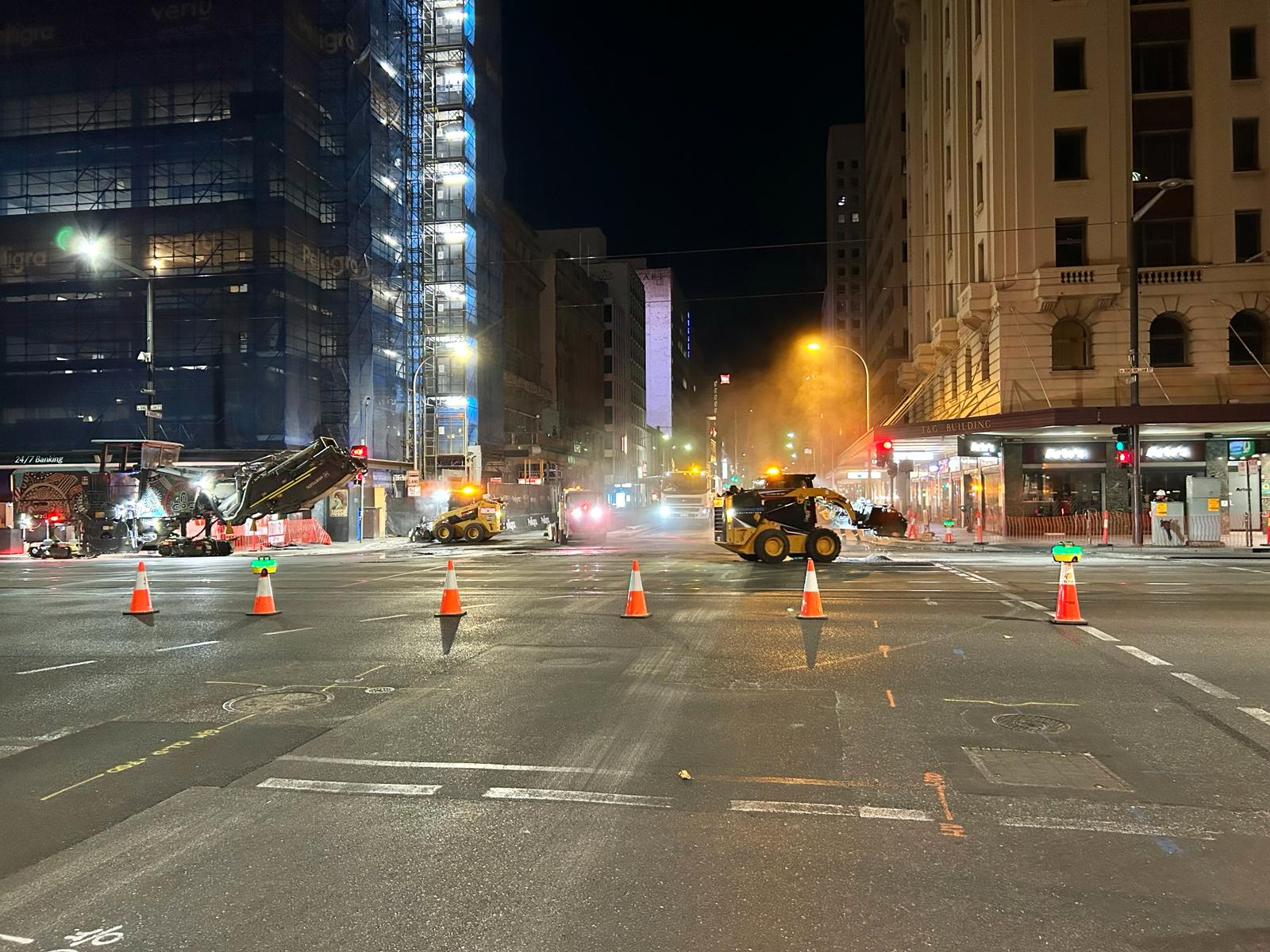
Delivering asphalt in Adelaide’s primary tram corridor required more than traffic control. King William Street is a live CBD spine: fixed-schedule trams, heavy plant in tight confines, constant pedestrian and e-scooter movement, and unplanned emergency access. In this environment, delay equals exposure.
Across 10 shifts the site managed 185 tram escorts, 68 recorded breaches, continuous pedestrian interfaces and active CBD traffic. The constraint was not capability, it was latency. Traditional communication chains create seconds of delay between detection and response. In a live tram corridor, those seconds matter.
This project implemented Altus’ Workzone Digitisation solution - converting static traffic management devices into connected infrastructure that shares site status instantly across the work zone. Rather than relying solely on radio calls or manual observation, the corridor itself became a digitally monitored and alerted work zone environment, enabling faster and more consistent responses to risk.
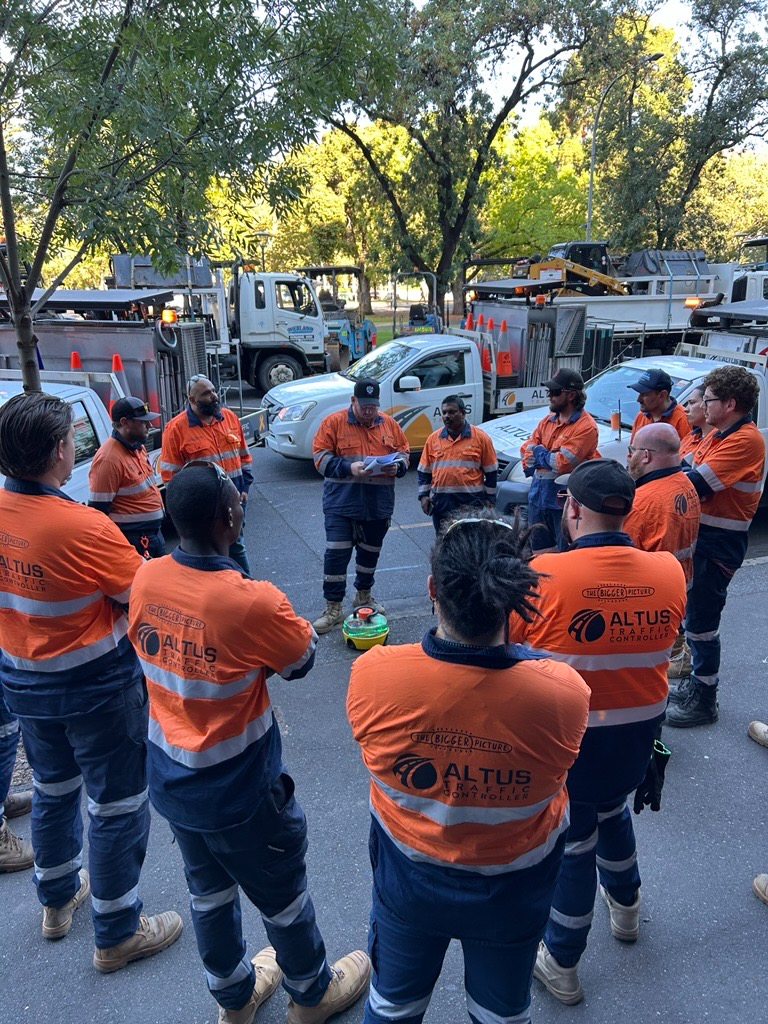
Real-Time Workzone Digitisation in Action
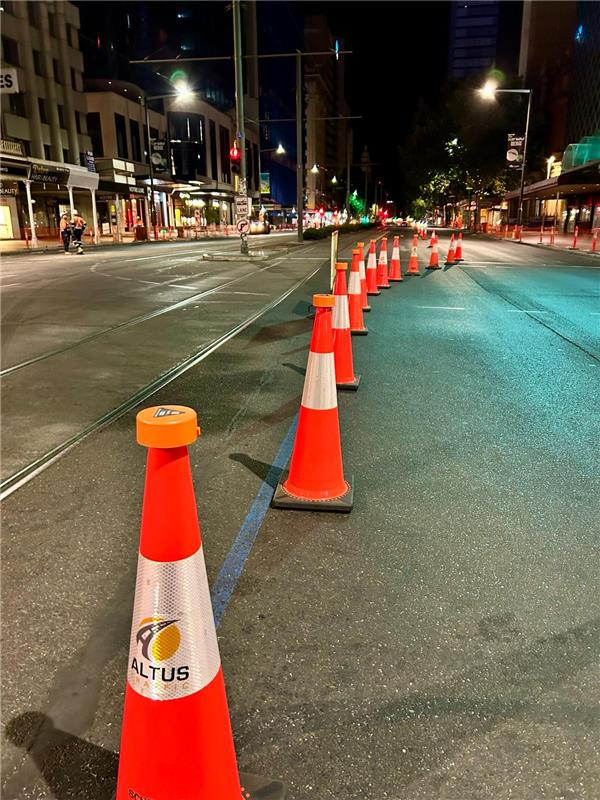
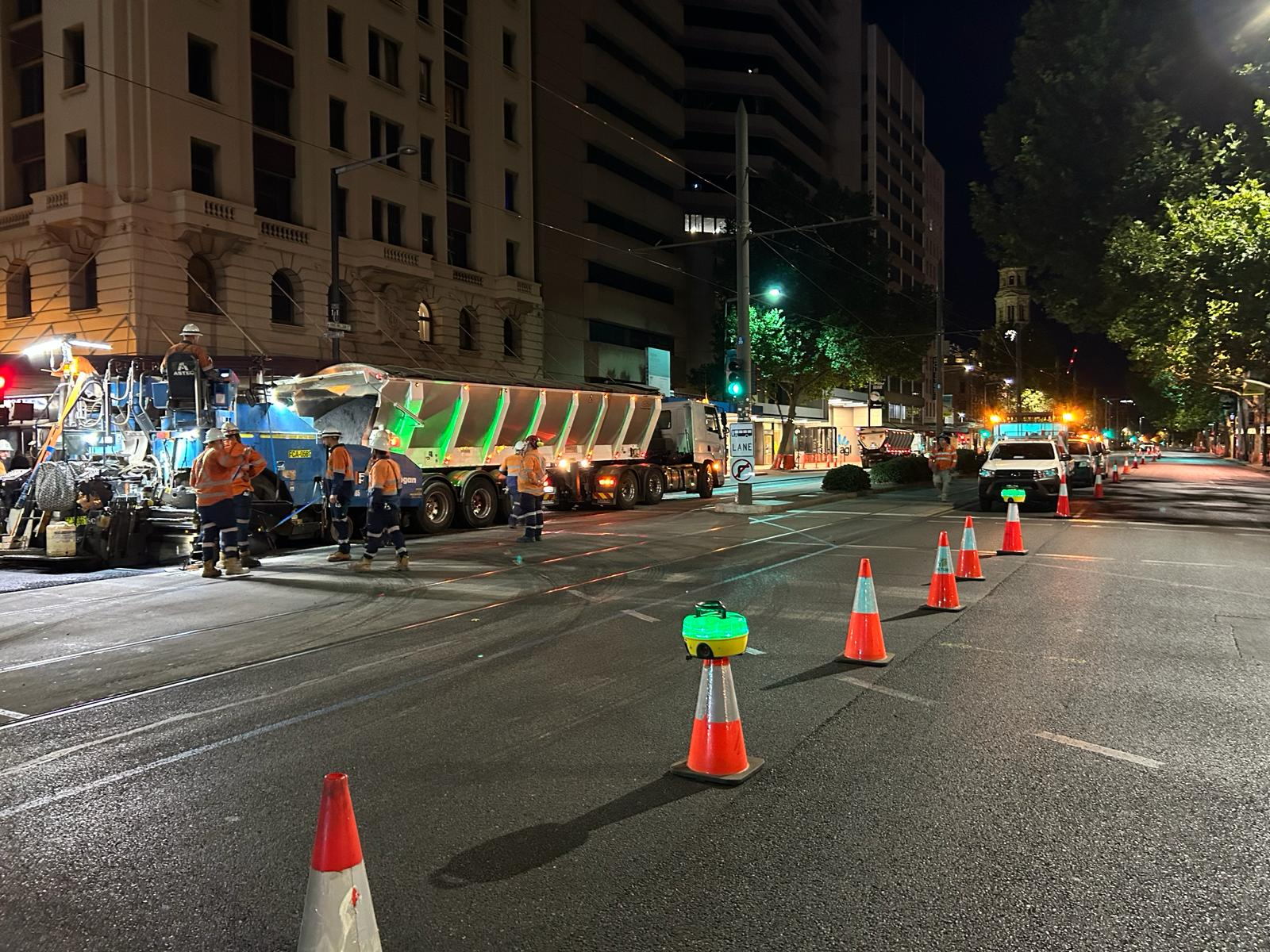
Through Workzone Digitisation, the site replaced sequential radio communication with shared, real-time situational awareness across the entire work zone. Connected devices and sensors within the traffic management setup detected site conditions and triggered immediate visual and audible alerts across the corridor.
Alerts were standardised to remove ambiguity:
Green confirmed normal operations.
Blue + audible alarm activated automatically for tram movements, stopping plant and initiating escort protocols.
Red + audible alarm signalled pedestrian or interface breaches within the work zone.
Because this system formed part of a Workzone Digitisation network, alerts were simultaneous. There were no relays and no interpretation layers - detection and response occurred in the same moment, ensuring operators, spotters, and traffic controllers all reacted to the same verified signal, fully leveraging the benefits of a connected, digitised work zone.
Stabilising Behaviour in a Complex Environment
The result was structured movement instead of disruption. All 185 tram escorts followed a consistent response pattern. Despite volumes ranging from 11 to 28 escorts per shift, driver behaviour remained stable and speed volatility did not spike. Predictability replaced interruption.
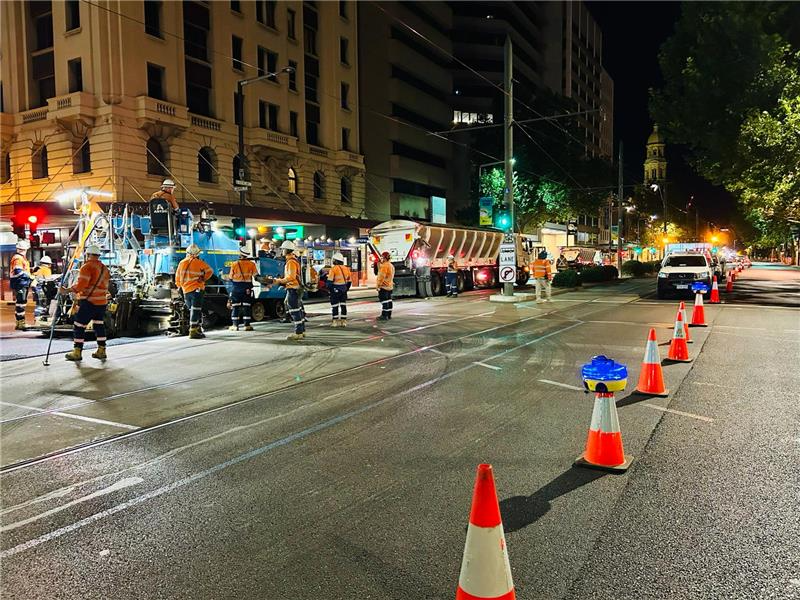
The 68 breaches — primarily pedestrian incursions — did not escalate. In a dense CBD setting, breaches are inevitable. Control is defined by how early they are stabilised. Workzone Digitisation collapsed response time, surfacing small risks before they matured.
Speed data reinforced this control. Northbound traffic tracked at or below the 25 km/h limit (17–24 km/h average), while southbound flows remained steady (30–33 km/h) without sharp fluctuations. The corridor stayed active, but not chaotic — demonstrating how Workzone Digitisation can stabilise driver behaviour while maintaining safe, predictable movement through a live corridor.
Digitised Oversight and Reduced Exposure
Workzone Digitisation also reduced exposure beyond live movements. Compliance monitoring shifted from patrol-based inspection to event-based oversight using the connected work zone infrastructure.
Signage compliance held at 100% across nine of ten shifts (one minor fall event reduced a single shift to 98.47%). Monitoring travel dropped from 340 km to 44 km — an 87% reduction — avoiding approximately 0.250 tonnes of CO₂e and significantly reducing vehicle exposure within the CBD network.
King William Street did not become less complex. It became structured through Workzone Digitisation. Risk was detected, alerted and acted upon immediately, rather than observed and relayed.
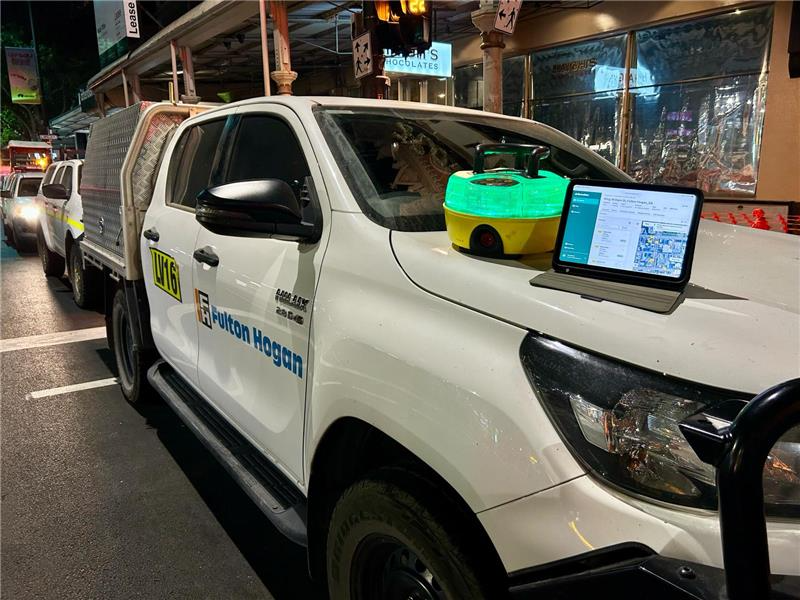
For Fulton Hogan, the project demonstrated that in high-consequence metropolitan corridors, safety performance is defined by time-to-response. Through the integration of Altus’ Workzone Digitisation, passive traffic management assets were transformed into connected, data-enabled work zone infrastructure. This digitised approach delivered measurable control, improved behavioural stability among road users, and greater operational efficiency — establishing a benchmark for fully digitised work zones operating within live CBD environments.